Published: May 28, 2026 | Updated: June 5, 2026
Washington Heights has some of the most architecturally significant residential buildings in all of New York City. It also has some of the most maintenance-intensive. The brownstones and townhouses that define the neighborhood were built between the 1880s and the early 1930s, and while they were constructed with materials and craftsmanship that have genuinely lasted, they require consistent, knowledgeable attention to keep lasting. Washington Heights brownstone owners are increasingly turning to annual maintenance plans, not because it’s trendy, but because the alternative keeps arriving as an emergency repair bill at the worst possible time. This post explains what makes these properties uniquely demanding, what we’ve found when we’ve inspected them, and why a structured maintenance plan changes the financial math for every owner in the neighborhood.
What Makes Washington Heights Brownstones Different to Maintain
Age is the starting point. According to the New York City Department of City Planning, a substantial portion of the residential buildings in Washington Heights date to before World War II, with many constructed during the brownstone-building boom of the late 19th century. These structures carry over 100 years of weather exposure, shifting foundations, aging plumbing, and building systems that have been patched and modified across multiple generations of ownership.
The brownstone facade itself requires specific ongoing attention. Brownstone is a sedimentary rock, the same property that gave it its warm color and workability when it was quarried, also makes it relatively porous by today’s standards. Water enters through the stone and through mortar joints that deteriorate over time. When those joints go unsealed, and the stone face goes unsealed for extended periods, water penetration becomes a structural issue rather than an aesthetic one.
Parapet walls, high stoops, cornices, and masonry ornamentation, all defining features of the Washington Heights streetscape, add to the maintenance complexity. Each of these elements has joints, connections, and exposed surfaces that need periodic professional review. A cornice that is deteriorating doesn’t always show obvious distress from the street. A parapet that has developed cracks in its cap may look intact from below while allowing water to enter the wall from the top.
Many properties in this neighborhood are also multi-unit. A single deferred issue on the roof or in a shared drainage system doesn’t affect one household; it affects every unit in the building. The consequence of neglect scales with the number of residents sharing the structure.
Washington Heights sits across a ridge with significant street-level grade changes. Properties on steep terrain deal with drainage demands that flat-ground buildings don’t. Groundwater pressure, surface runoff, and the behavior of drainage systems during heavy rain all interact with that topography in ways that require experienced assessment rather than a general approach.
What We’ve Found When We’ve Inspected These Properties
Our case experience in Washington Heights is direct. A property owner’s daughter reached out to us about her elderly mother’s brownstone in Washington Heights, a home that had been in the family for years but had gone without professional maintenance oversight for an extended period. After several conversations, the family signed on to our Home Services contract, starting with a full roof-to-cellar inspection.
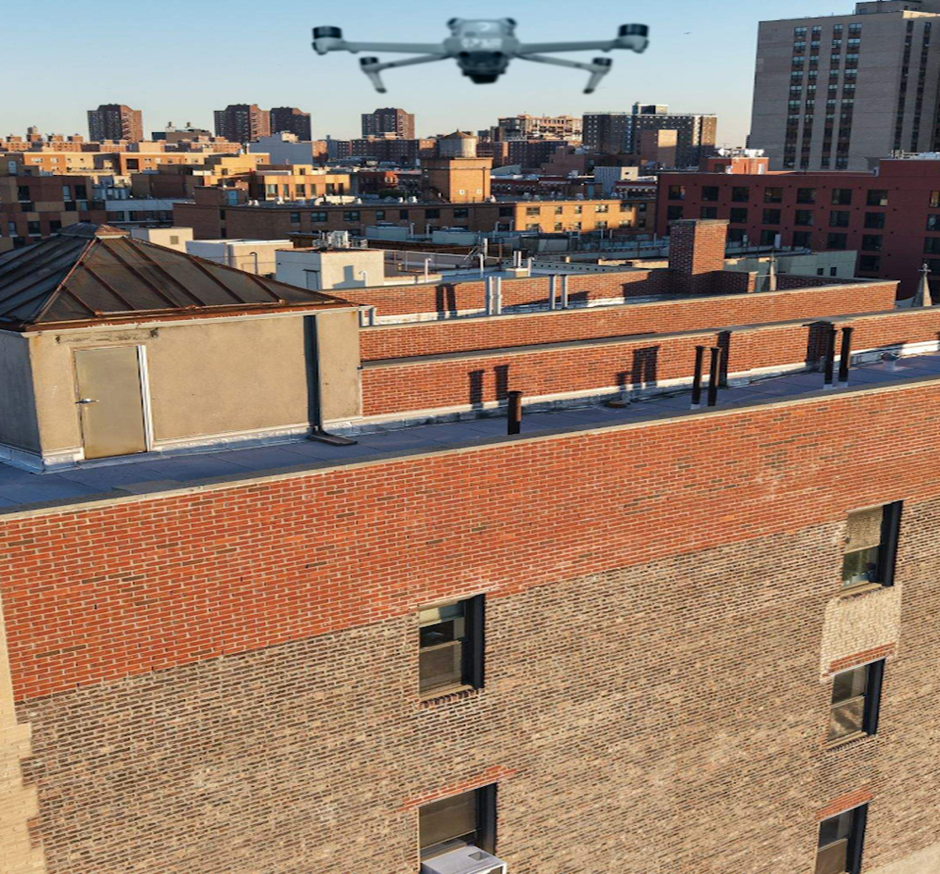
What we found illustrated exactly how these properties degrade when nobody is systematically looking. At the rooftop level, HVAC equipment was non-operational and hadn’t been serviced in an indeterminate period. Gutters were improperly fastened, pulling away from the fascia and directing water behind the wall rather than into the downspout. Multiple water intrusion points existed at the parapet, where sealant had deteriorated, and coping stones were improperly waterproofed. Our roof-to-cellar inspection traced the water pathways floor by floor: staining, structural moisture, and eventual basement impact, with plumbing, HVAC, and the furnace all showing effects of the sustained water presence.
None of these conditions appeared suddenly. Each one was the accumulation of seasonal cycles without professional intervention, a freeze-thaw cycle that widened a joint, a summer that added another year of sealant deterioration, a winter that sent water through a pathway that had been developing for years.
Our process is Inspect, Detect, and Resolve. The inspection phase creates a fully documented picture of the property’s condition. The detection phase identifies the source and severity of every issue we find, not just the visible symptoms. The resolve phase addresses those issues with targeted repairs in order of priority. For the Washington Heights family, that meant restoring the property from a condition of accumulated deferred maintenance to a baseline that could then be maintained going forward.
What an Annual Maintenance Plan Changes for Brownstone Owners
The most significant change a maintenance plan introduces is the elimination of the long detection gap. Without scheduled professional visits, issues develop for months or years before anyone identifies them. With biannual visits, the maximum gap between professional assessments is six months, short enough that most problems don’t have time to compound significantly before we catch them.
Our townhouse maintenance program covers gutter clearing and drain work at each visit, roof debris removal, HVAC filter replacement coordinated with our full HVAC servicing, exterior water system seasonal management, basic cabinet and door adjustments, porter services, and snow service. These aren’t individual transactions; they’re a consistent, documented rhythm that means no system on the property goes unchecked for an entire year.
The client portal component matters as well. Every visit, every finding, and every completed service is logged. An owner who lives in the building has a full record. An owner who manages the property remotely, or a family member overseeing a parent’s home, has the same access to the same information without needing to be present for every visit. That documentation also creates a property history that has real value, in insurance claims, in refinancing conversations, and in eventual sale discussions.
Emergency response access comes with the contract as well. When something does go wrong, and with a century-old brownstone, something eventually does, contract holders have an established relationship and priority response. We maintain stockpiled mitigation equipment and relationships with major insurance companies and estimators, which means we can respond efficiently when fire, flood, or other damage events occur, not just when scheduled visits are due. Our broader disaster and prevention services extend this capacity across the full range of emergency scenarios.
The Financial Case for Signing Up
The financial argument for a maintenance plan is built on two separate comparisons. The first is the cost of preventive maintenance versus the cost of reactive repair. A routine gutter clearing twice a year costs a predictable, modest amount. Water damage mitigation from a failed gutter system involves drywall removal, insulation replacement, structural drying, and potentially mold remediation, a scope that is measured in days of work and thousands of dollars. The gap between those two scenarios is consistent and wide.
The second comparison is about what a property without a maintenance history is worth versus one with it. Brownstones in Washington Heights represent significant real estate value. Owners who are positioning a property for sale, for a refinance, or simply for a favorable insurance relationship benefit from documented condition history. A buyer or lender looking at a property that has a clear maintenance record, regular professional inspection findings, and no hidden deferred conditions is in a fundamentally different position than one reviewing a property with no records and an uncertain baseline.
Multi-unit owners add a third dimension. Rental income is contingent on the building staying operational. A basement flood that displaces tenants, a failed boiler in January, or a drain backup affecting common areas all interrupt income, and the cost of the repair is compounded by the income disruption. Preventive maintenance directly protects the revenue side of the investment.
When we do find a Washington Heights property that has accumulated deferred maintenance beyond what a maintenance plan can address in visits alone, we bring in our renovations and restorations capabilities, structural repairs, material restoration, and system upgrades that return the property to a maintainable baseline. But the goal of the maintenance plan is to keep properties from ever needing that level of intervention.
Why Owners Choose HPRE+D Specifically
We’ve operated in Upper Manhattan since 2002, first as the development division of Harlem Lofts Inc., then as an independent entity from 2012, and with an active maintenance division since 2015. We’ve been converting, renovating, and maintaining townhouses in this neighborhood across the full range of conditions, property types, and ownership situations for over two decades.
That history means we know Washington Heights’ building stock specifically. We know how these brownstones were built, how they age, and where they typically fail. When our team conducts a roof-to-cellar inspection on a property on 181st Street or St. Nicholas Avenue, the assessment comes from people who have seen the same building systems in dozens of similar properties in the same neighborhood. That context is not something you can replicate with a general contractor or a generic home inspection service.
Our senior project management team holds industry-recognized certifications in emergency response and mitigation work, and HPRED has built strong relationships with major insurance companies and estimators to better support clients when property damage occurs. We approach every property with a long-term perspective because many clients in this neighborhood maintain lasting relationships with their buildings, whether it’s a family home passed down through generations or an investment property that plays an important role in a long-term financial strategy. Learn more about our team and approach on our about us page. about us page.
Conclusion
Washington Heights brownstone maintenance is a long-term investment in a property that was built to last, but only if it’s cared for on a consistent, professional schedule. Annual maintenance plans convert unpredictable repair costs into a structured program, create documented property history that has real financial value, and give owners access to emergency response through an established relationship rather than an emergency call to an unfamiliar contractor. For owners who understand what these buildings are worth and what it takes to protect them, the plan isn’t an optional add-on; it’s part of responsible ownership.
About HPRE+D
Harlem Property Re+Development (HPRE+D) has been serving Washington Heights and Upper Manhattan since 2015, backed by over two decades of redevelopment and construction expertise in the area. Our main office is at 764 St. Nicholas Avenue, Garden Unit, New York, NY 10031, with a second location at 272 Malcolm X Blvd (Lenox Ave), New York, NY 10027.
Our townhouse maintenance contracts cover biannual scheduled visits, roof-to-cellar inspections, HVAC servicing, seasonal drainage and gutter work, exterior water system management, emergency response, and a dedicated client portal. If your brownstone hasn’t had a professional assessment recently, that’s the right starting point. Reach out to our team at (212) 864-4376 or info@hpred.com to begin.
Frequently Asked Questions
What should a Washington Heights brownstone inspection include?
A thorough inspection should cover the rooftop and parapet, all floor levels for water intrusion and structural concerns, the basement and foundation for drainage issues and moisture, the exterior facade for brownstone spalling and mortar joint deterioration, gutters and downspouts, HVAC and mechanical equipment, and plumbing accessibility. A documented inspection report with photographs of all findings is a baseline requirement.
How often do brownstone owners in NYC need professional maintenance visits?
Biannual visits, one in spring and one in fall, align with seasonal transitions and cover the preparation and assessment needs of both warmer and colder months. A single annual visit is better than none, but it leaves one full seasonal transition without a professional review, which is long enough for many issues to develop meaningfully.
What are the most common structural problems in Washington Heights brownstones?
The most frequent issues include brownstone spalling from freeze-thaw cycles, deteriorated mortar joints that allow water infiltration, parapet cracking and sealant failure, gutter system failures, flat rooftop drainage problems, and aging mechanical systems, particularly HVAC, furnaces, and cast-iron drain lines that have reached or exceeded their service life without regular professional attention.
Can HPRE+D handle both ongoing maintenance and emergency repairs for my brownstone?
Yes. Our maintenance contracts cover scheduled biannual visits and all the services they include, while our disaster and prevention capabilities extend to emergency response for fire, flood, water damage, and other urgent situations. Contract holders receive priority response when emergencies occur, and our team maintains the equipment and insurance relationships to handle mitigation work efficiently.
How do I start an annual maintenance plan with HPRE+D?
The starting point is a roof-to-cellar inspection, which gives us, and you, a full picture of the property’s current condition. From there, we establish a maintenance program tailored to the specific needs of your building. Reach out to us at (212) 864-4376, email info@hpred.com, or visit our website to start the conversation.

Johvany Delarosa is a dedicated content author with expertise in property maintenance, renovations, redevelopment, and disaster prevention solutions for residential and investment properties. With a strong understanding of New York City property services, Johvany creates informative and practical content that helps property owners, investors, and managers make informed decisions about maintenance, restorations, inspections, and long-term property improvements. His work focuses on delivering clear insights into modern property solutions, preventative strategies, and efficient redevelopment services.